What are social media?
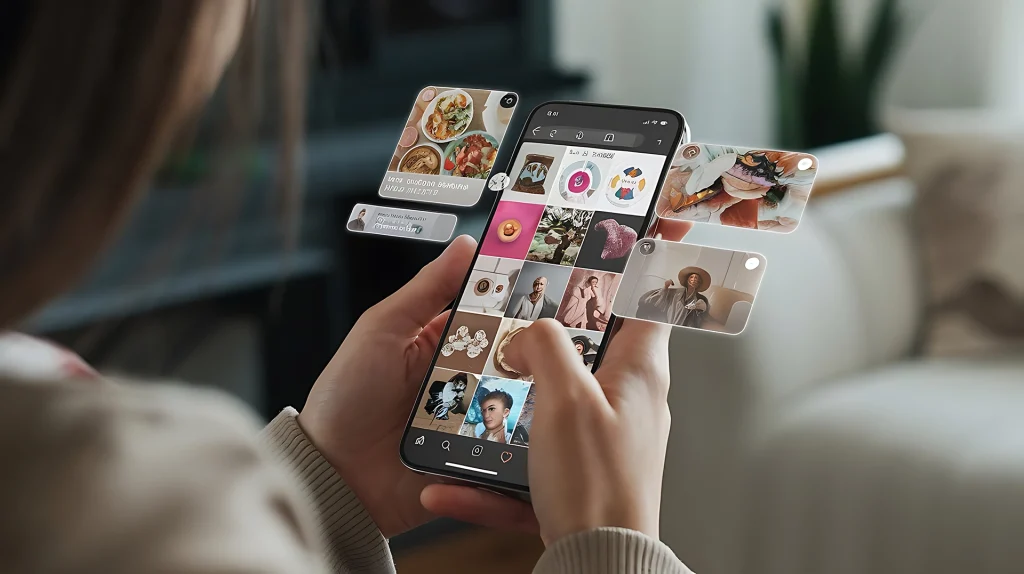
Social media are digital platforms that enable interaction between users and brands through content, messages, and communities. They are used to share text, images, videos, links, and live streams, all in an environment that encourages two-way conversation.
Beyond technology, social networks function as living ecosystems, where every post, reaction, or comment generates data and information that helps platforms personalise the user experience. Their algorithms decide what content you will see first, who to follow, and what type of posts are most relevant to you.
In other words: social media connects people with common interests and makes it easier for those relationships to remain active over time. It works in real time, encourages immediacy, and allows any user—from a large company to a small creator—to gain visibility if they offer value and authenticity.
The evolution of social media in 2025
The world of social media has changed radically in just a few years. In 2025, its evolution will revolve around three main areas: technology, experience and trust.
On the one hand, artificial intelligence has become the main driver of personalisation. Algorithms are now capable of understanding not only what you like, but also what might interest you tomorrow. Platforms such as TikTok and Instagram use AI to anticipate your preferences, making consumption more fluid and addictive.
On the other hand, augmented reality and virtual reality are integrated into everyday use. From trying out a product with an Instagram filter to attending an event in an immersive environment, social media has expanded the boundaries of the “digital”.
Furthermore, data privacy and security are no longer optional. Users are increasingly demanding and seek platforms that give them greater control over their information. This change has forced large networks to adopt clearer and more transparent policies.
Finally, ephemeral formats—such as stories, reels, and short videos—dominate consumption. In a saturated environment, brief, fresh, and visual content has become the universal language of 2025.
What will social media be used for in 2025?
Today, social media is much more than just a communication tool. It is an ecosystem where brands build relationships, sell and foster loyalty. Let’s take a look at its main functions:
1. Branding and brand positioning
Companies use social media to shape their identity: to showcase their tone, values, and purpose. Through visual content and consistent narratives, they gain visibility among their ideal audience and reinforce trust. In a competitive environment, authenticity has become the best branding strategy.
2. Lead generation and sales
Social networks are authentic sales funnels. They attract users through valuable content and convert them into customers thanks to targeted campaigns or integrated purchases within the platforms themselves. Social commerce features allow users to discover, compare, and purchase without leaving the app.
3. Direct communication with customers
Customer service has found its most agile channel in social media. Brands respond to queries, manage incidents and listen to suggestions in real time. This direct interaction humanises the relationship, builds loyalty and turns customers into ambassadors.
4. Education and training
More and more companies and professionals are using their profiles to educate: they share tutorials, analyses, webinars, and practical advice. Educational content not only attracts followers, but also positions the brand as a leader in its sector.
5. Virality and organic reach
Social media has a power that no other medium can match: virality. When content excites or surprises, it is shared in a matter of minutes. This multiplier effect allows you to reach thousands of users without direct investment in advertising.
6. Community and loyalty
Finally, social media networks are spaces where communities are built. Private groups, pages, and forums allow for ongoing conversations with people who share interests or values. Loyalty is no longer measured solely in purchases, but in participation.
If you are still unsure about how to use social media strategically for your business, at +másketing we can help make it simple.
Types of social networks and their current usefulness
Not all social networks serve the same purpose. Each one has its own language, audience, and objectives:
- Visual platforms such as Instagram, TikTok, and Pinterest focus on aesthetics and discovery. They are ideal for showcasing products, inspiring, or sparking desire.
- Professional networks such as LinkedIn connect companies and professionals, generating job opportunities and enhancing reputations.
- Conversational platforms such as X (Twitter) encourage rapid debate and the dissemination of news.
- Video networks such as YouTube and TikTok dominate entertainment and education consumption.
- Closed communities such as Facebook Groups or Discord allow for the creation of deeper spaces of belonging.
Choosing the right network depends on the objective of your strategy.
It’s not about being everywhere, but about being good at the ones that really connect with your audience.
Benefits of using social media in 2025
Working professionally with networks brings measurable benefits:
- Targeted reach: you can reach exactly the audience you are interested in.
- Controlled ROI: every action can be measured in clicks, leads, or sales.
- Scalability: it is possible to grow without large initial investments.
- Flexibility: formats adapt to each type of content.
- Instant feedback: results are visible in real time.
- Indirect SEO: an active presence on social media boosts your visibility on search engines.
Overall, social media has established itself as one of the most profitable and versatile tools in digital marketing today.
Key challenges and considerations
Not everything is straightforward. Networks also present challenges that should be taken into account:
- Content saturation: competition for attention is fierce; standing out requires constant creativity.
- Algorithm changes: the rules of the game change without prior notice, requiring adaptability.
- Reputation management: a poorly managed crisis can go viral in minutes.
- Privacy and regulations: compliance with regulations such as the GDPR is mandatory.
- Time and resources: creating quality content requires planning, equipment, and consistency.
The key is to balance creativity with strategy and anticipate changes in the digital environment.

Best practices for leveraging social media in 2025
If you want your networks to really work, focus on strategy and consistency:
- Define clear objectives (visibility, leads, loyalty).
- Get to know your audience well: their interests, objections, and digital habits.
- Vary your formats: combine text, images, video and interactive content.
- Maintain a consistent posting frequency.
- Analyse metrics and learn from the data: reach, interactions, and conversions.
- Conduct A/B testing with different messages or creative elements.
- Encourage participation: surveys, questions, prize draws or challenges.
- Add value before selling: useful content builds trust.
- Collaborate with creators or influencers aligned with your brand.
- Ensure visual consistency and tone of voice in every post.
These practices not only improve your results, but also build a solid and consistent presence in the long term.
The immediate future: social media trends 2025–2027
The digital landscape continues to change at breakneck speed, and some trends that will shape the coming years are already emerging:
- Massive social commerce: the integration between social networks and e-commerce will continue to grow.
- Metaverse and immersive community: virtual experiences will become more commonplace in brands and events.
- AI-generated content: artificial intelligence will enable pieces to be created more quickly, although authenticity will be key.
- Privacy and blockchain: decentralisation will give users back some control over their data.
- Total integration: networks will cease to be merely entertainment and become an environment where we work, learn and shop.
Choose a partner you can talk to easily and quickly. If they are also based in Zaragoza, you will have the advantage of being able to meet in person whenever you need to.
So why is it necessary for a company to have social media in 2025?
In short, social media in 2025 will be much more than just communication tools. They will be spaces for real connection between people and brands, where creativity, strategy and trust are the keys to success.
If you use them purposefully and consistently, social media can become the most powerful channel for growing your business, building community, and making a positive impact.
Networks can be your best ally if you work them strategically and consistently.
At +másketing, your social media agency in Zaragoza, we help local businesses grow with personalised, creative and measurable strategies.